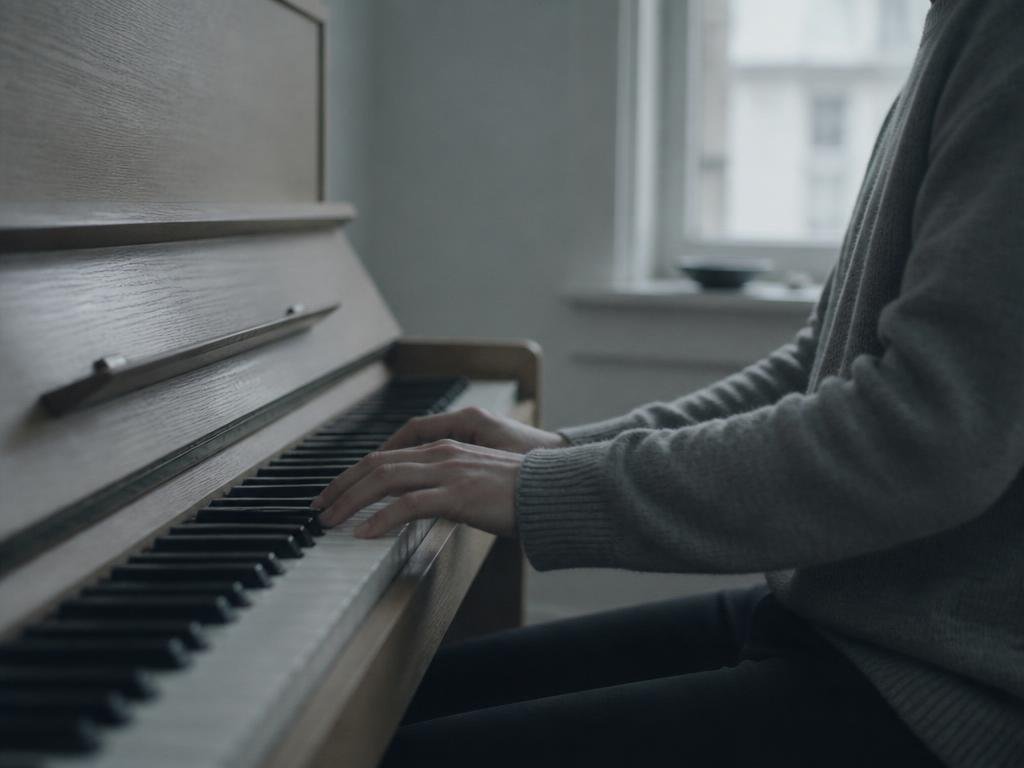
Adults arrive at the piano carrying something children do not: the memory of being told, once, that they were not musical. Often by a teacher, often around the age of nine.
It is worth saying plainly. That assessment was almost certainly about reading music, not about music.
The first month
You learn where the notes are without counting, and you learn three chords. That is genuinely it. By the end of the month you can play a simple song with both hands doing different things.
The second month
Chords start joining up. The left hand stops thinking about each note and starts holding a shape. Timing becomes the thing you work on, because timing is what makes a beginner sound like a beginner.
The third month
You begin recognising the same shapes in songs you did not learn. This is the moment most people describe as the piano finally opening up, and it comes from the ear rather than from the page.
Nothing here requires talent. It requires twenty minutes and someone showing you the shapes in a sensible order.